Why we host the room, not the workshop
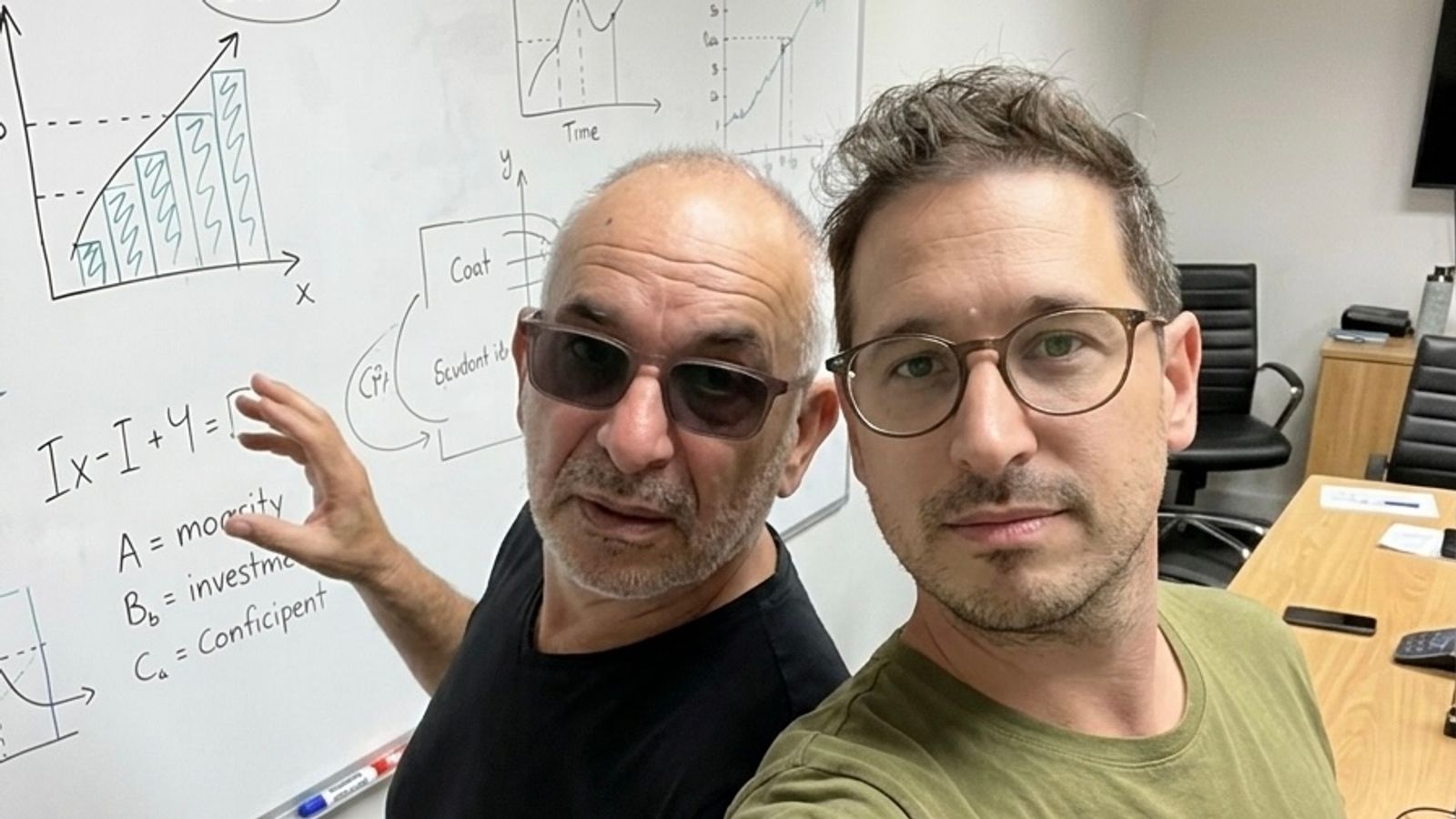
If your AI pilots are stalling, the move isn't to send your team to a better workshop.
We can say that out loud because we run two-day workshops, and we still believe it. The reason is a story Ivan Kaye told me a few weeks ago about a shampoo company that decided to stop selling to people with hair.
A story about shampoo
Ivan has spent two decades building B2B distribution channels in Australia. We spent an hour together trying to answer a single question: how do you get a mid-market CIO to actually engage with you, in a market where every CIO is now being pitched three times a day?
He took us to John Leese, the marketing director at Schwarzkopf in the early days.
Leese was looking at a stalled product. Same shampoo as everyone else. Same shelf. He asked the question every founder eventually asks: who is my customer?
Everyone in the room said the same thing. Anyone with hair.
Leese said no. My customer is the hairdresser.
He went to hairdressers and offered something nobody else was offering. I'll sign your shop lease. I'll write your business plan. I'll do your accounting. For free. All he wanted in return was one thing — put my product on your shop front, and when you're whispering recommendations to clients in the chair, sell it at a premium. Send me half the money in a box every week. I'll refill the product.
The hairdressers said yes. They were great at relationships and bad at running businesses. Leese solved the problem they actually had. Within three years Schwarzkopf was the third best-selling shampoo brand in the world, and the only place you could buy it was a salon.
The lesson is not "find a channel partner". The lesson is identify what your channel is bad at, and pay the cost of fixing it. Sales becomes a side effect of solving the operating problem nobody else volunteered to solve.
What this has to do with AI workshops
There are now hundreds of consultancies selling AI workshops to mid-market boards. The good ones are excellent. The course material is widely available. The frameworks are largely interchangeable. Most of us teach some version of the same thing, because the underlying operating model — owners, metrics, kill criteria, delivery cadence — isn't proprietary. It's just discipline.
If you're a CFO or COO trying to pick a workshop, you're not actually shopping for course content. You're shopping for an outcome:
- A leadership team that stops arguing about AI and starts deciding about AI.
- A list of pilots with named owners, kill criteria, and dates.
- Permission, in your own boardroom, to say "we're not doing this one."
Workshop content gets you maybe 20% of the way to those outcomes. The other 80% is the room: who's facilitating, what's enforced afterwards, and whether anyone has the authority to make the call.
That's what we mean when we say we don't sell the workshop. We sell the room the workshop happens in — and we keep showing up after the workshop ends.
Why the workshop alone can't deliver the outcome
A two-day workshop, on its own, is a knowledge transfer. It cannot make a decision for a leadership team that's been avoiding one for six months. It cannot impose a 90-day cadence on a CIO who doesn't have the political capital to ask for it. It cannot manufacture a kill criterion on a pilot that someone on the exec team is emotionally attached to.
Those things only happen when there's a recurring forum, with an outside party, where the question gets asked again every fortnight until it gets answered.
That's the room. And the workshop is just one event inside it.
Your CIO is drowning in pitches
There's a number Ivan and I ended up arguing about. The classic marketing rule of thumb used to be that a buyer needs around seven touchpoints with you before they trust you enough to consider buying. Ivan thinks the number now is closer to twenty-three.
I think he's directionally right. Here's why.
In the last two years, every mid-market CIO has been added to a hundred email lists, dropped into a dozen Slack communities, and pitched by an average of three vendors a week. Their inbox is now an adversarial environment. They have learned, correctly, to assume that anyone reaching out is selling — until proven otherwise.
The only way to break that default is to be the room they come back to, not the pitch they ignore.
Practically, that means publishing the questions they can't answer in public — how do we actually pick which AI bets to fund this quarter? what do we do when a pilot we sponsored personally isn't going to ship? how do we present the kill decision to the board without it looking like failure? — and hosting the conversation in a way that doesn't end with a deck of services on slide 47.
Most "thought leadership" content fails this test. It answers questions executives already know how to answer, or pitches the answer the vendor wants to sell. The questions that matter are the ones nobody is publishing on, because the honest answer is uncomfortable.
What it looks like, concretely
For MethodWorks, the practice has three layers, and only one of them is a workshop.
- The free thing — the Pilot Purgatory scorecard. Eighteen questions across six dimensions, an honest read on where your AI portfolio actually sits, and a one-page report you can take into your next board meeting. We get nothing for it except an email address and the right to write to you again. We send the report whether you ever talk to us or not.
- The diagnosis — Pilot Autopsy. Two weeks, $5,500 AUD. We look at the pilots that haven't shipped and tell you why. The output isn't a recommendation deck — it's a list with named owners, named blockers, and kill candidates. Sometimes the most expensive line in the report reads "stop doing this one." Most of our Decision Discipline clients come through this door, but plenty of organisations buy the autopsy, act on it, and never need us again. That's fine. The autopsy is honest, or it's worth nothing.
- The room — the Decision Discipline Program. This is the part most workshop vendors don't have. A 90-day operating rhythm where your exec team brings live pilots into the room every fortnight, applies the Investable Bet Gate (fund / park / kill), and walks out with decisions captured by name. We're the host. You're the room. The two-day workshop sits at the front of this — but it's the cadence afterwards that actually changes how decisions get made.
Two of three layers don't require you to be in a paid program with us. The scorecard is free. The Pilot Autopsy is paid, but it's a discrete two-week engagement designed to be acted on without ever buying the third layer — plenty of organisations take the autopsy, do the work themselves, and never come back. That isn't a leak in the funnel; it's the operating principle. The first job is to be the room. The selling, if it happens, is a side effect of being useful first.
What to do this quarter
If you're sitting in a CFO, COO, or CIO seat watching your AI initiatives quietly fail to land, you have three options.
- Buy another workshop. Some of them are good. None of them will make the decision for you.
- Hire another vendor. You'll get a pilot. It may or may not reach production. Statistically, most of them don't.
- Get into a room where the decisions actually get made — and stay in it long enough for the operating model to change.
We host that third room. There are others. The point isn't that ours is the only one — the point is that none of them are workshops, and if your portfolio is stalled, that's the room you actually need.
If you'd like to see whether ours fits, book a 20-minute discovery call. If you'd rather start with the scorecard, start there — it costs nothing and we'll tell you straight if we're the wrong room for you.
The hardest part of getting AI into production isn't the technology. It's manufacturing a decision moment where a named human has to commit, with consequences either way. Workshops don't manufacture that. Rooms do.
Credit to Ivan Kaye for the conversation that drove this post — Ivan runs Referron and BBG, and wrote up his own version of the same conversation at bbg2020.blogspot.com.
Pilots stalling? Bring the specifics to a 20-minute call.
Book a discovery call